Back to home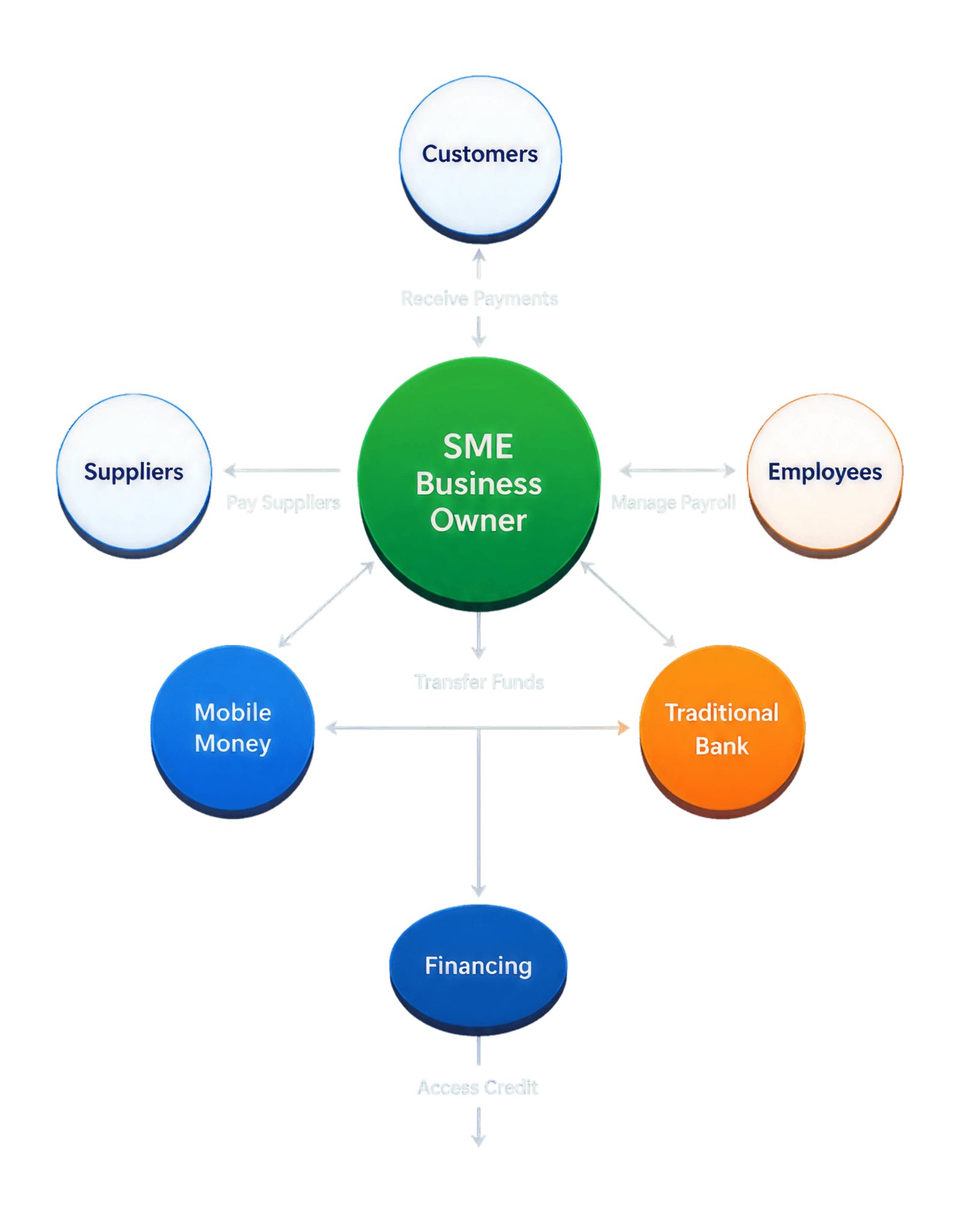
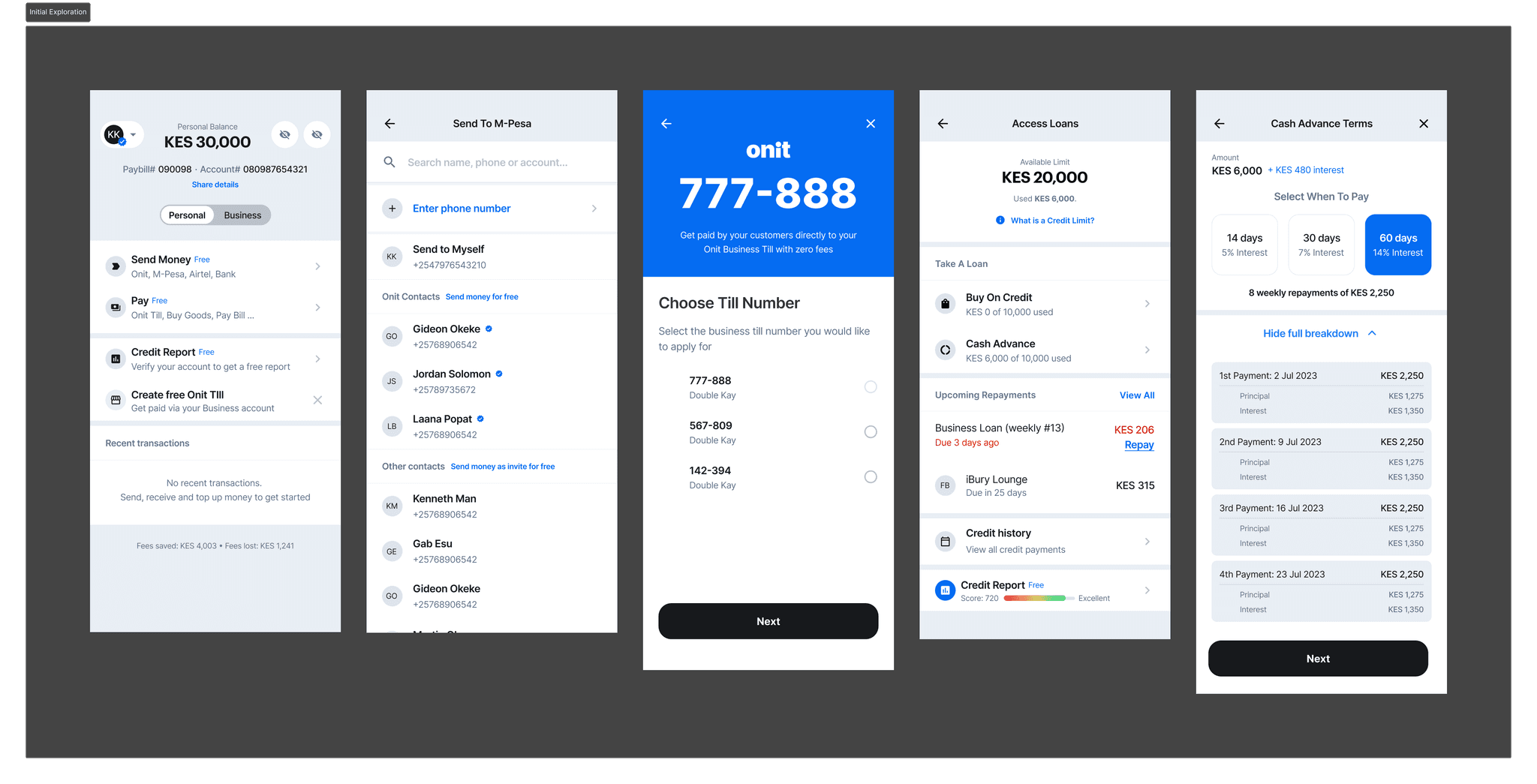
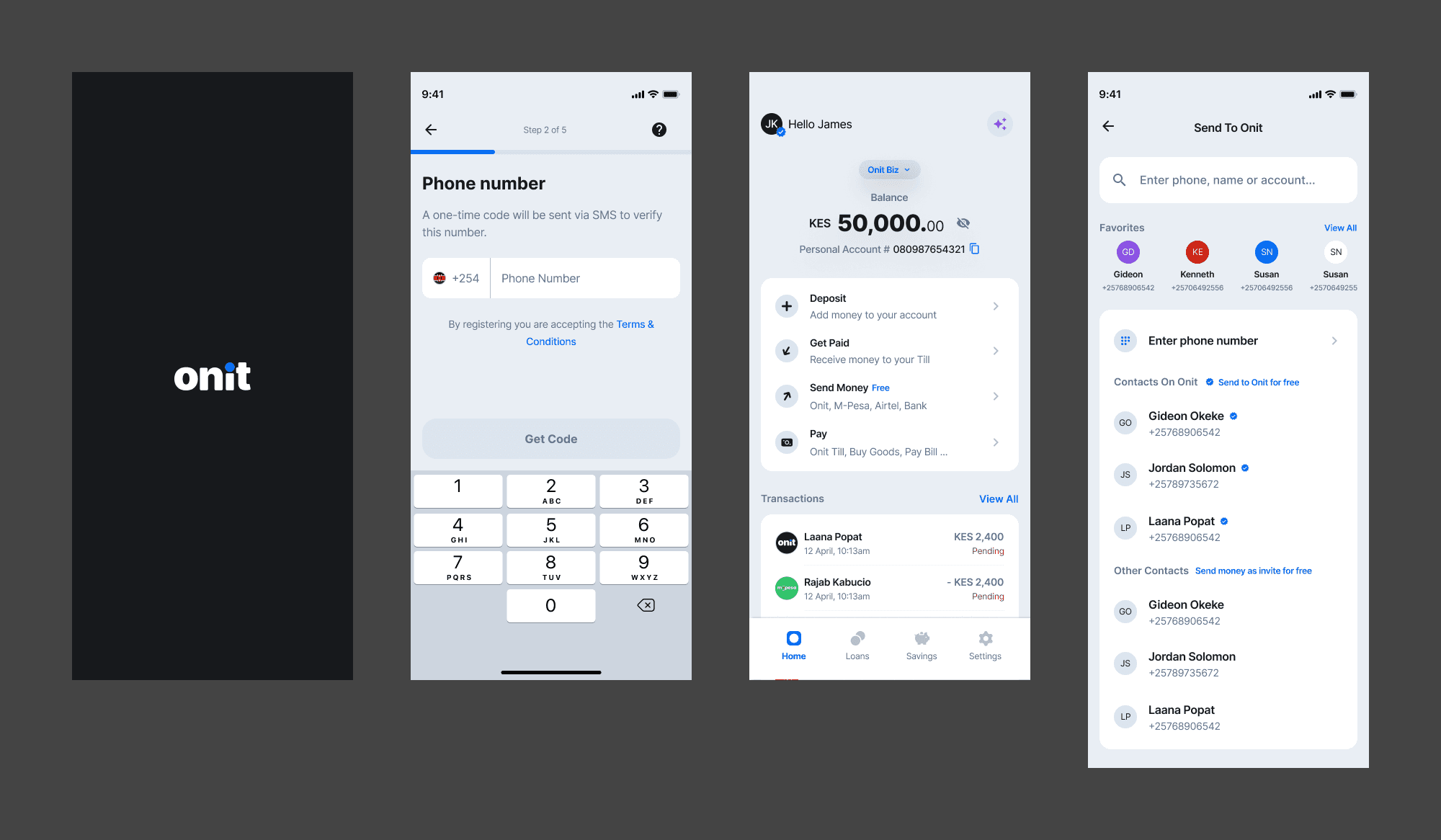
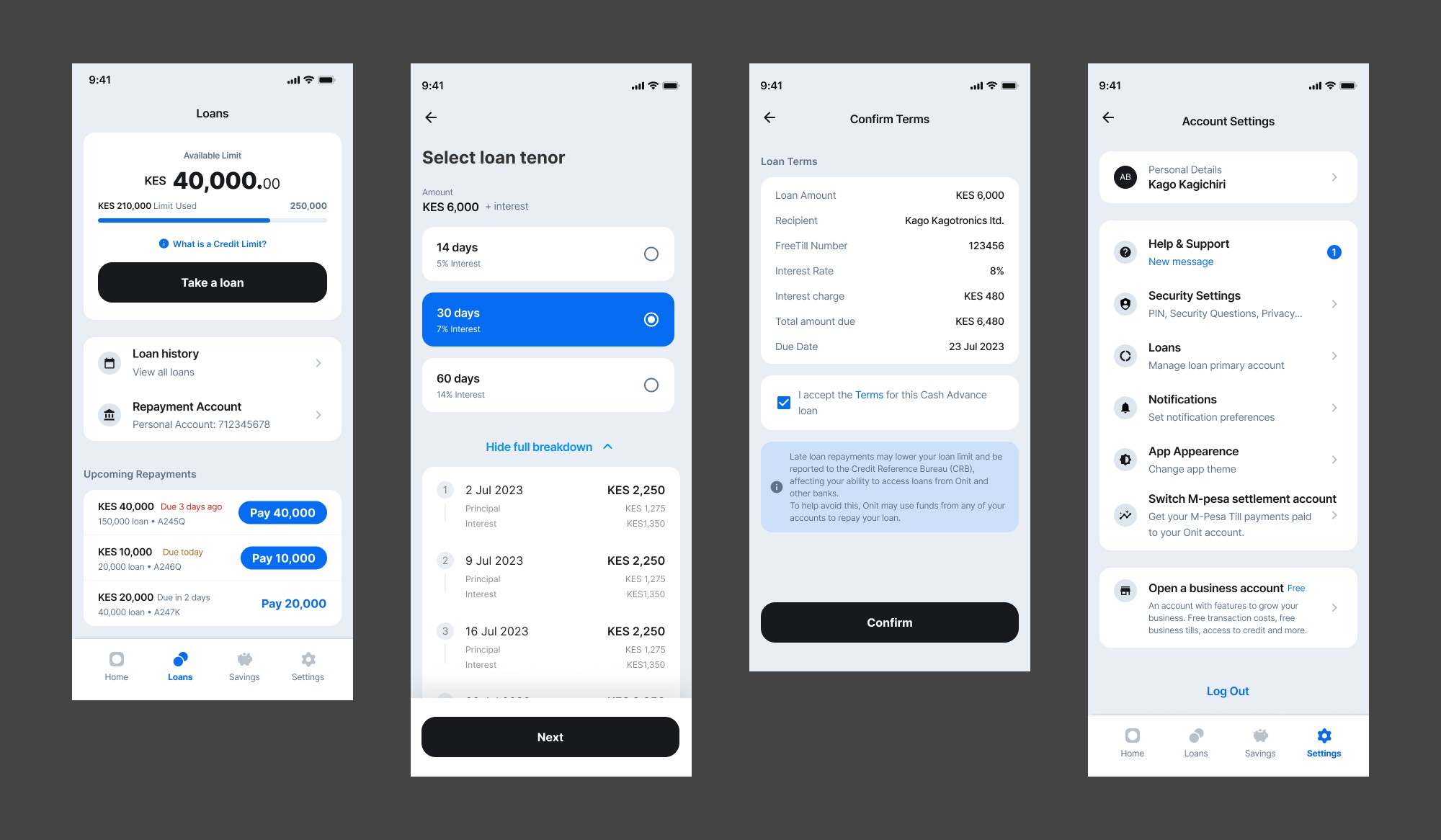
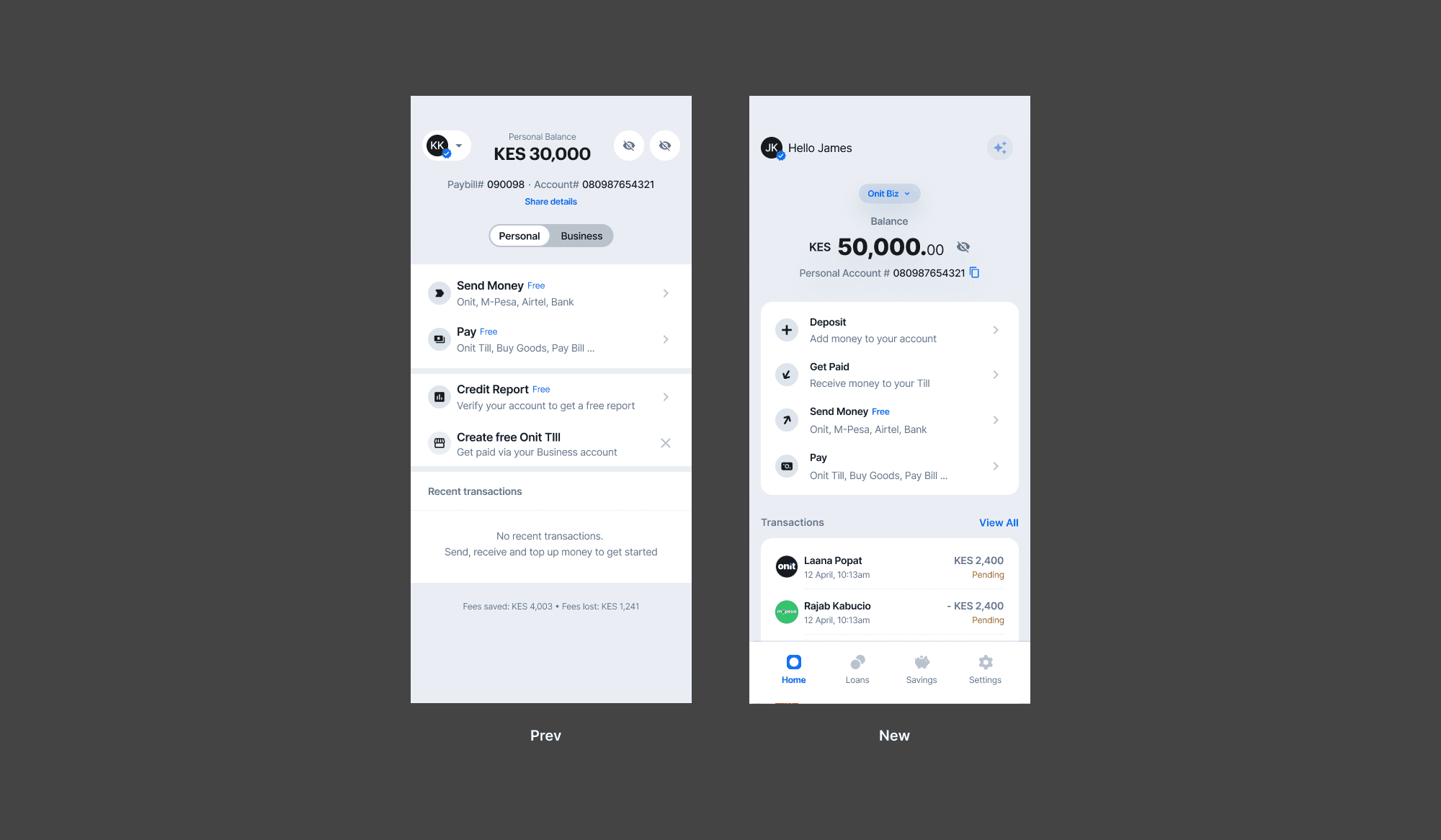
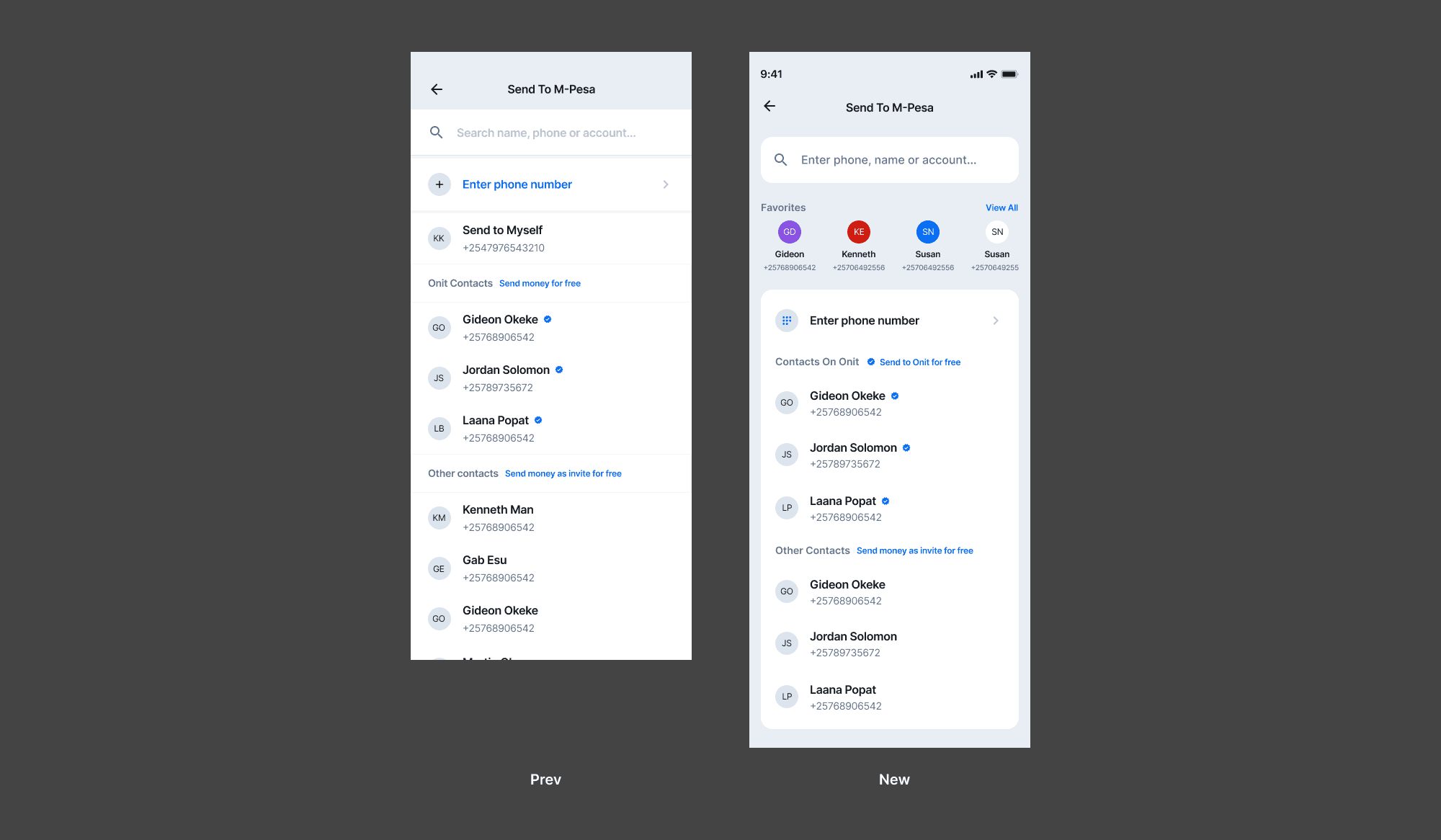
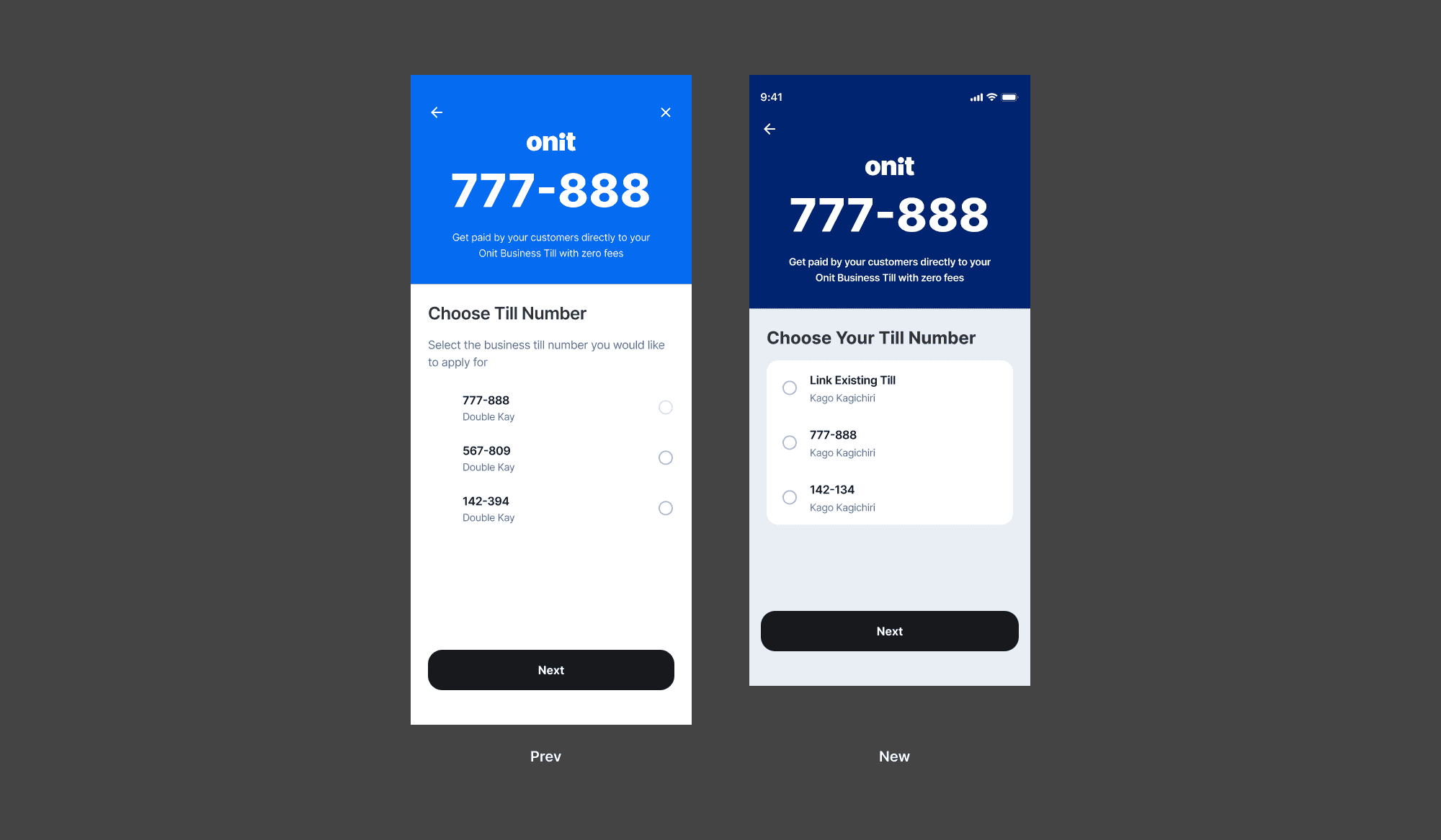
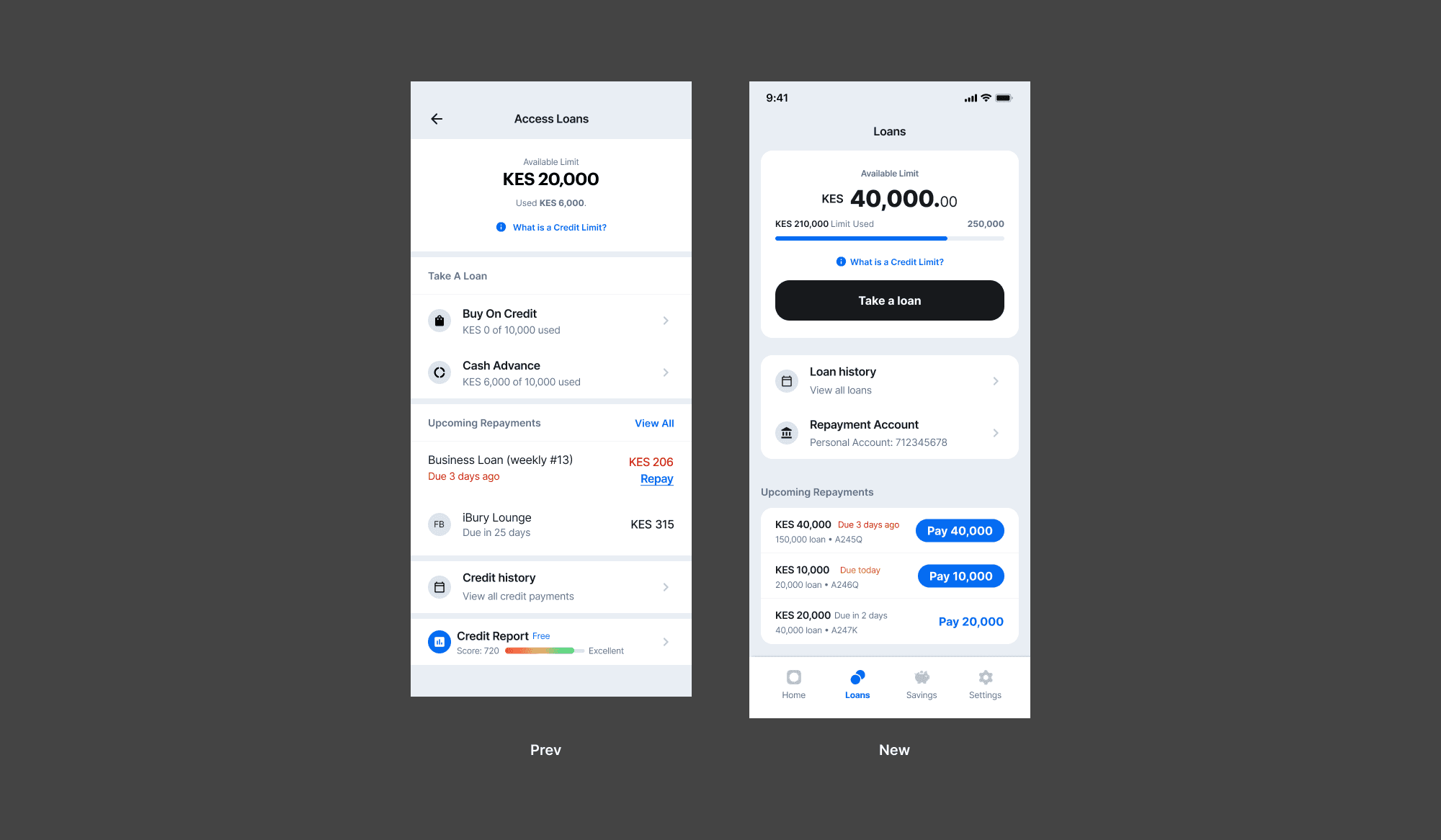
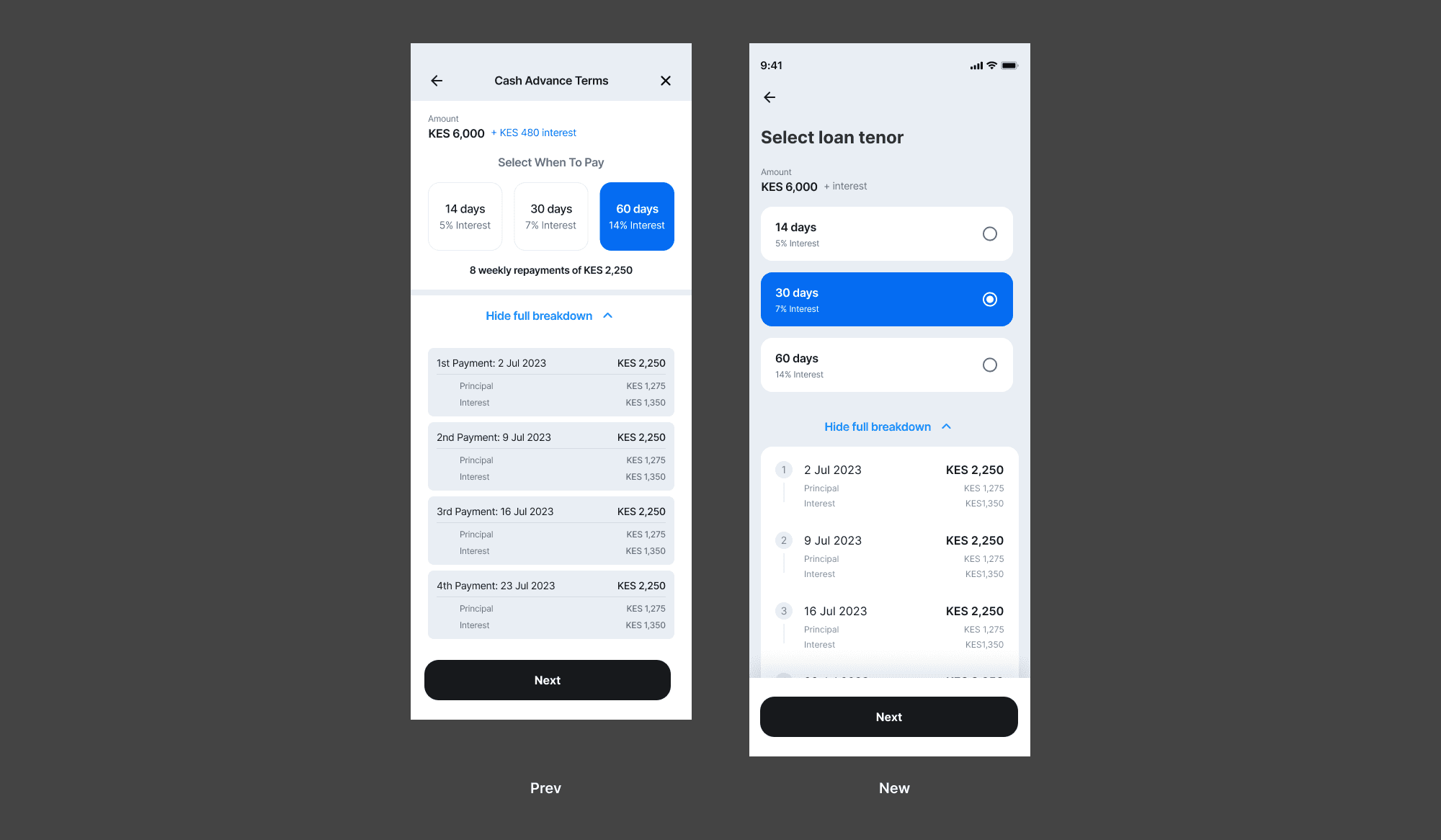
Transforming a lending platform into a digital bank for Kenya's underserved SMEs.
Onit is a digital-first bank helping SMEs and individuals manage money, receive payments, and access financing without traditional banking friction.
Mobile web
Product designer
User research and synthesis, Ecosystem mapping, User flows and information architecture, Core banking experiences, KYC and onboarding flows, Payments and transfers, Credit and financing experiences, Design system development, Prototype testing and validation
Product managers, Engineers, Operations teams, and another designer to design the foundation of Onit's banking experience.
Workflow redesign, information architecture, system patterns, UI components
THE OPPORTUNITY
Kenya's SMEs face a fragmented financial ecosystem
Traditional banks impose lengthy onboarding processes and fees. Mobile money services simplify payments but become expensive for businesses operating at scale. As Onit evolved from a lending platform into a licensed digital bank, we saw an opportunity to create a banking experience that was transparent, affordable, and designed around how businesses actually operate.
Goals
Zero-fee banking
Build trust
Reduce onboarding friction
Drive adoption, limited spend
Support business growth
What we were up against
Lengthy bank onboarding
Hidden fees
Mobile money costs at scale
Low trust in "free" banking
7.4M
MSMEs in Kenya, ~40% of GDP
~90%
Of Kenya's mobile money market is M-Pesa
84.8%
Financially included, vs 27% in 2007
<2min
Time to open an Onit account
Sources: KNBS 2024 FinAccess survey, Communications Authority of Kenya 2024–25, Onit product data.
RESEARCH
Understanding the financial ecosystem
Before designing solutions, we needed to understand how money moved through the SME ecosystem, not how it moved through a bank.
10k+
SMEs Studied
40+
Interviews
1000+
Surveys
Cross team
Workshops with product, ops, compliance
SMEs weren't rejecting digital finance. They were rejecting systems that failed to solve real operational problems.
Key Insights
Three patterns came out of the interviews and workshops. Each one sets up one of the challenges ahead.
Trust had to be earned, not claimed
People assumed a free bank was hiding fees somewhere. Messaging didn't move them, visible proof did.
Onboarding had to match M-Pesa's speed
Users wanted account access as fast as topping up airtime. Slow verification was a dealbreaker.
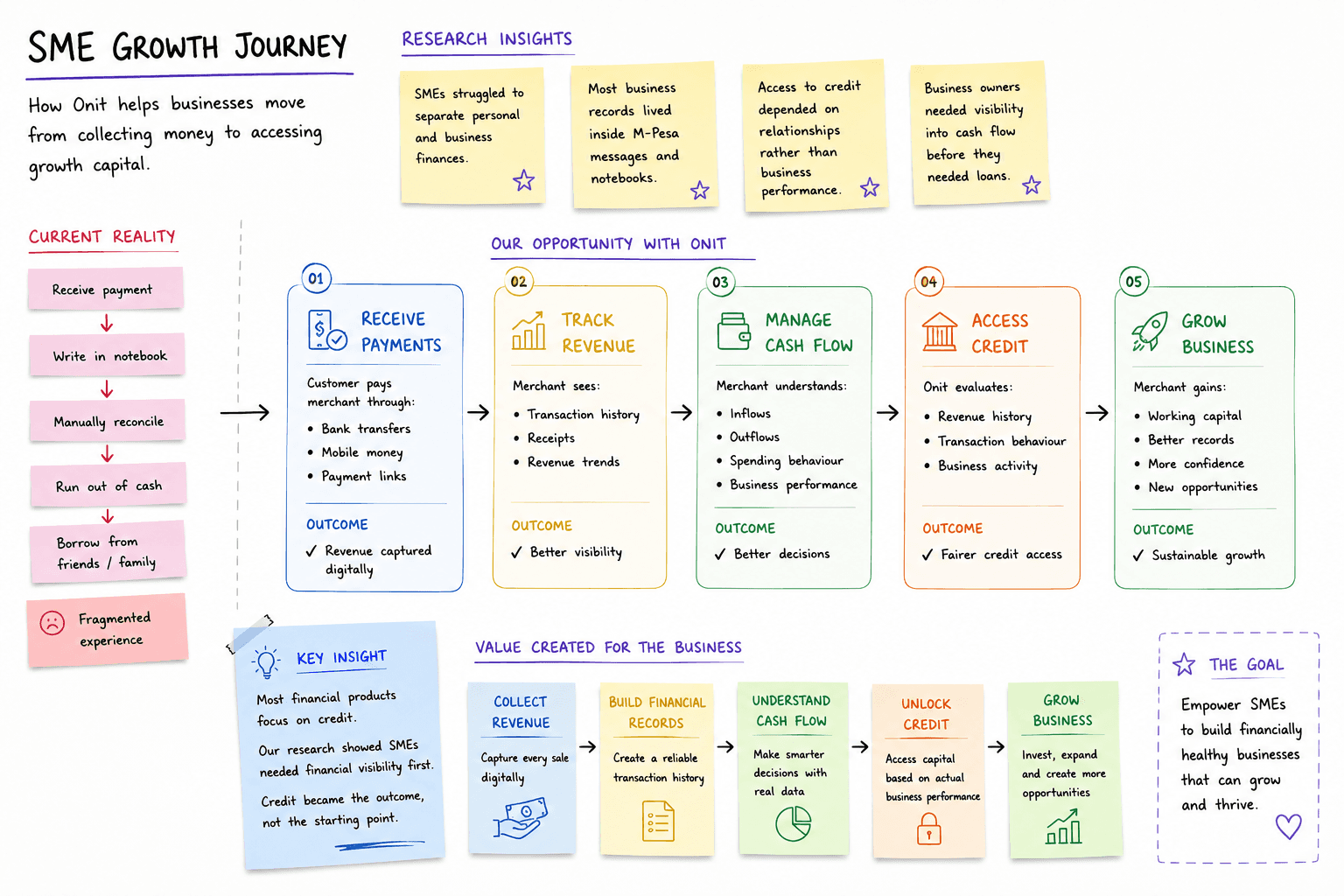
Cash flow mattered more than credit
Owners wanted an easier way to track daily sales and reconcile cash, not just access to a loan.
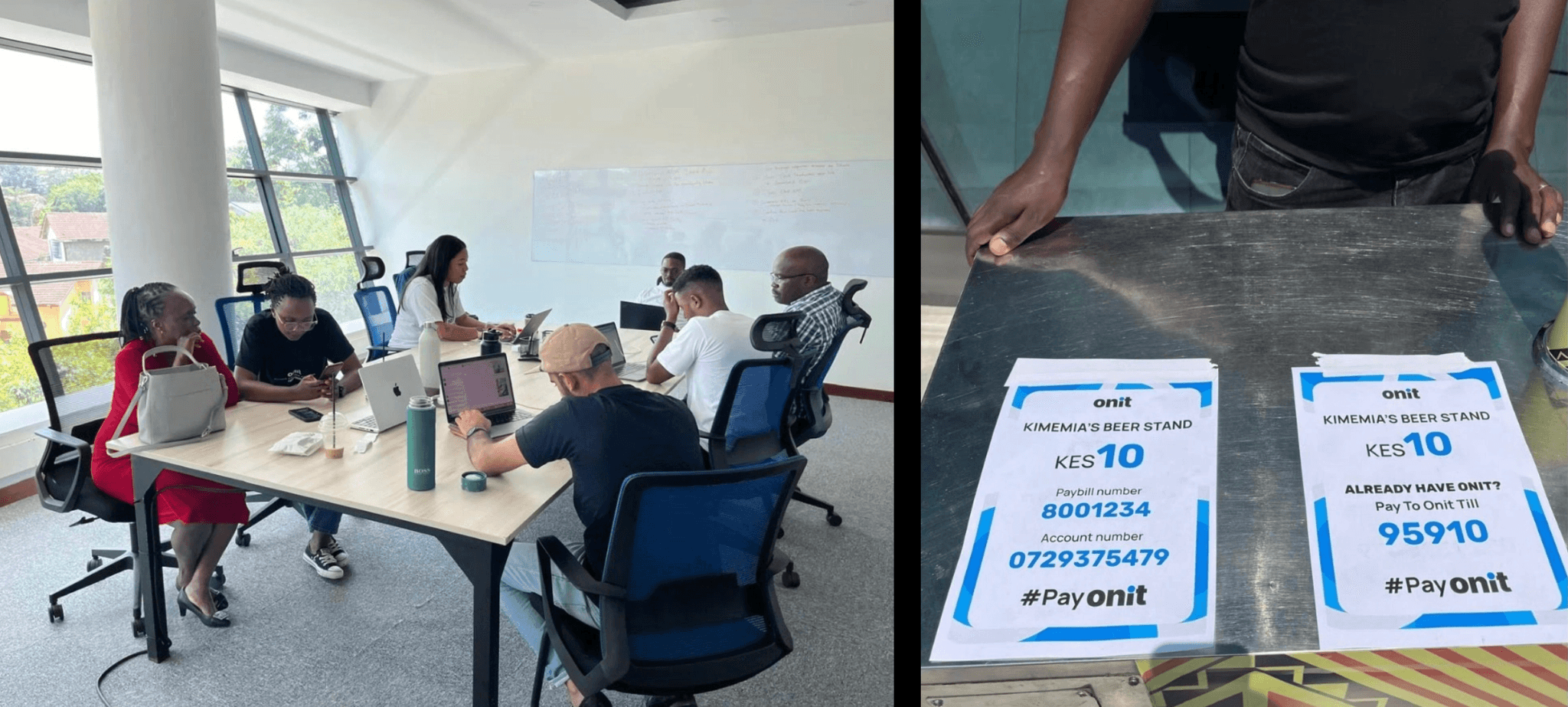
Synthesizing insights from interviews, surveys, and stakeholder workshops.
CHALLENGE 1
Building trust in a free bank
One of the most surprising findings from research was that users did not trust free banking. People assumed hidden fees would eventually appear. The challenge wasn't communicating value. The challenge was making value visible.
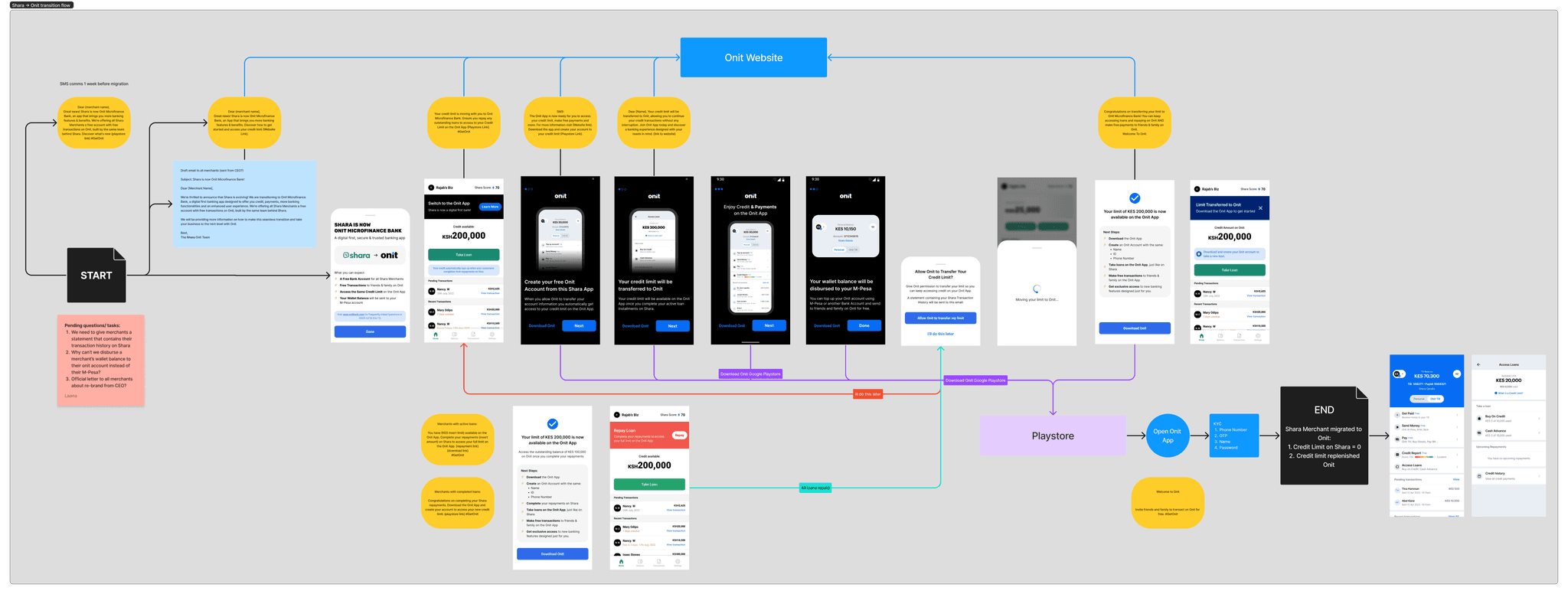
Userflows
Initial explorations
CHALLENGE 2
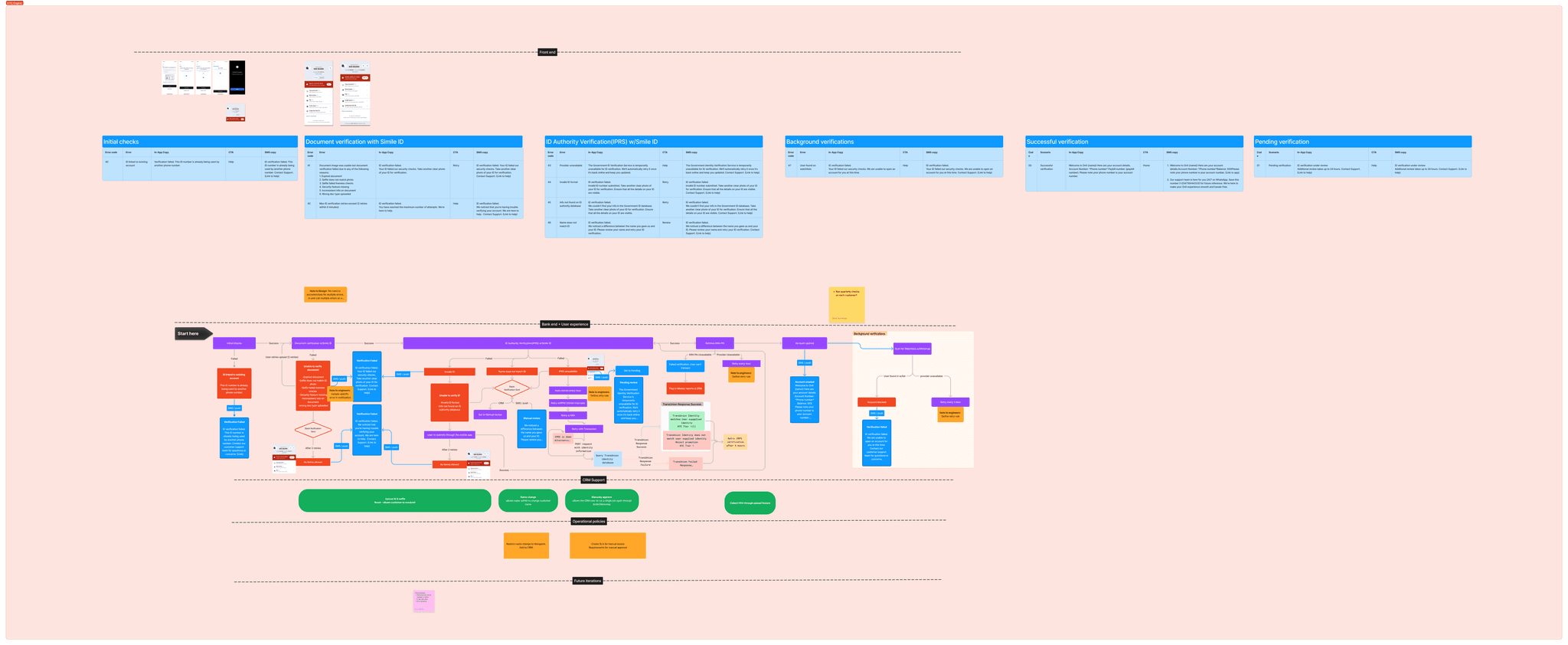
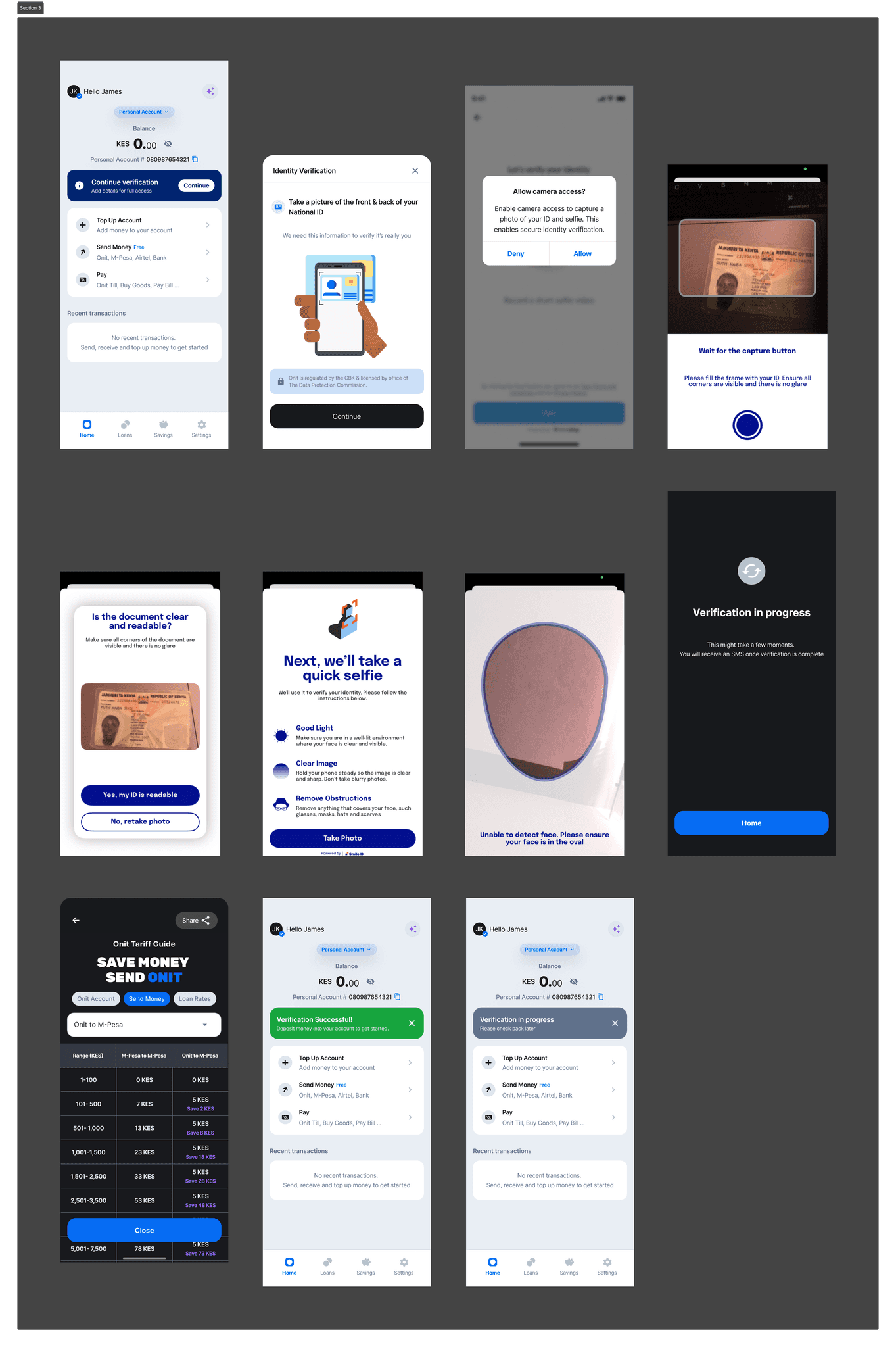
Reducing KYC Friction
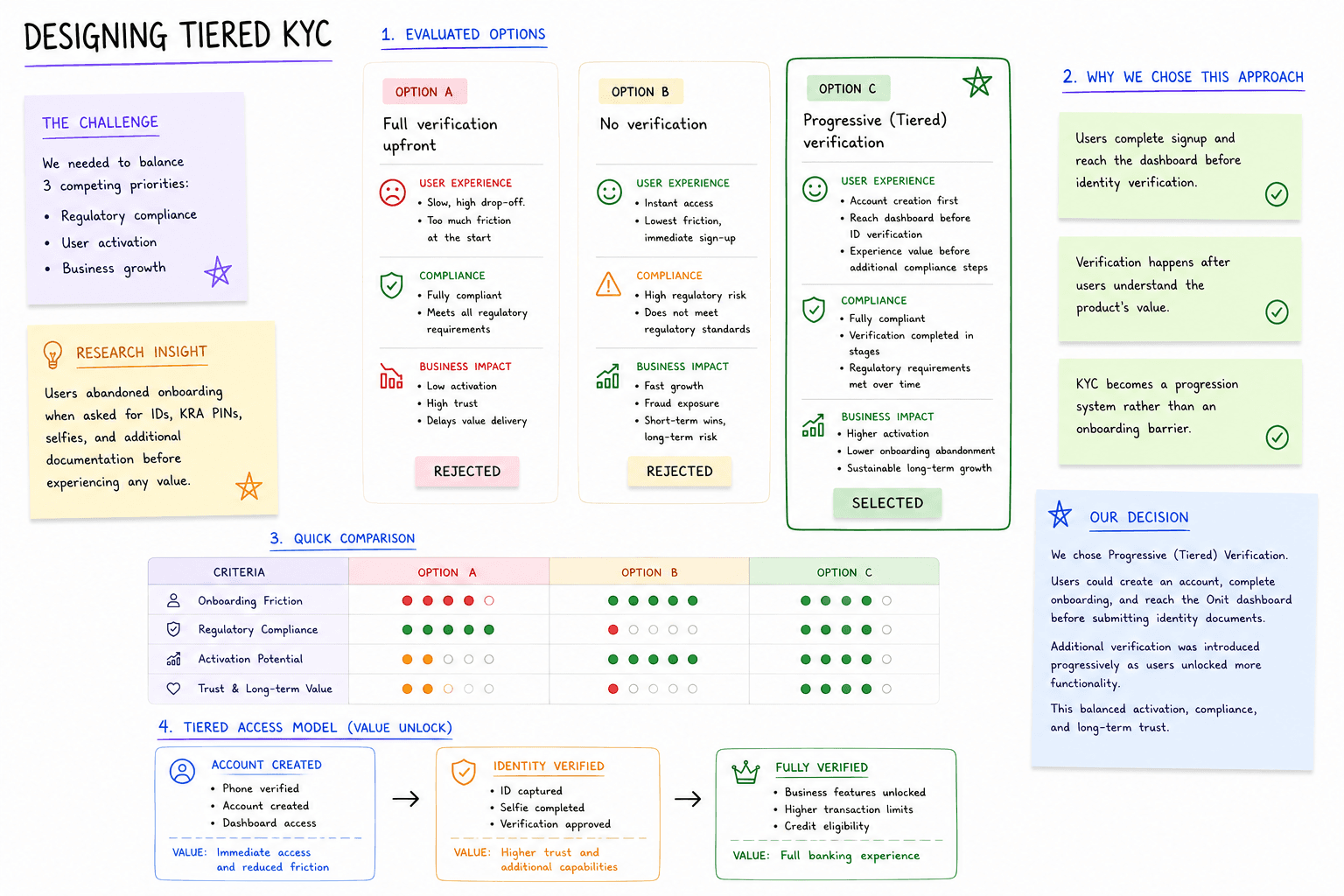
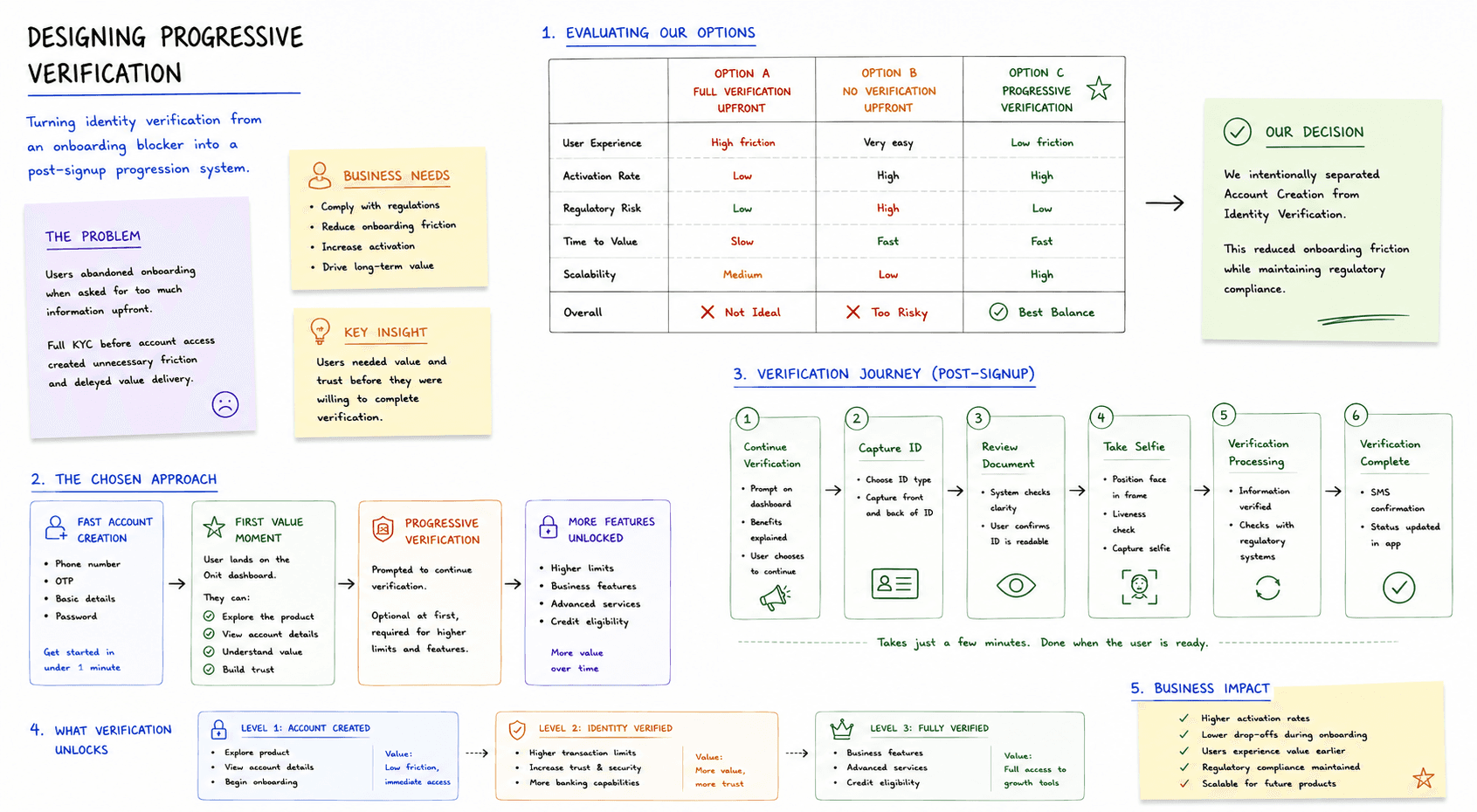
Regulations required identity verification. Users wanted immediate access. The business needed activation. We weighed three approaches and chose progressive verification.
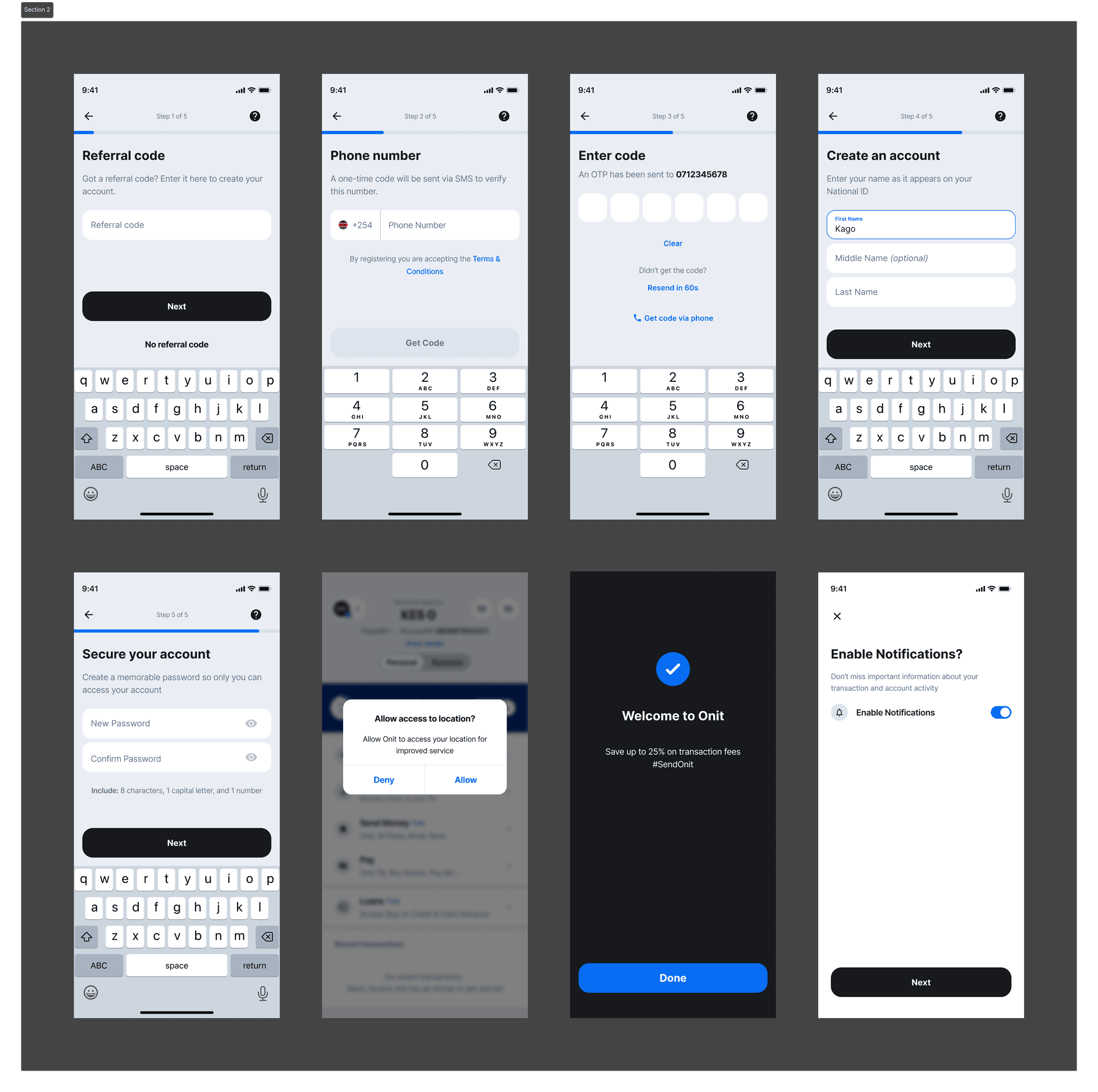
Final KYC Screens
CHALLENGE 3
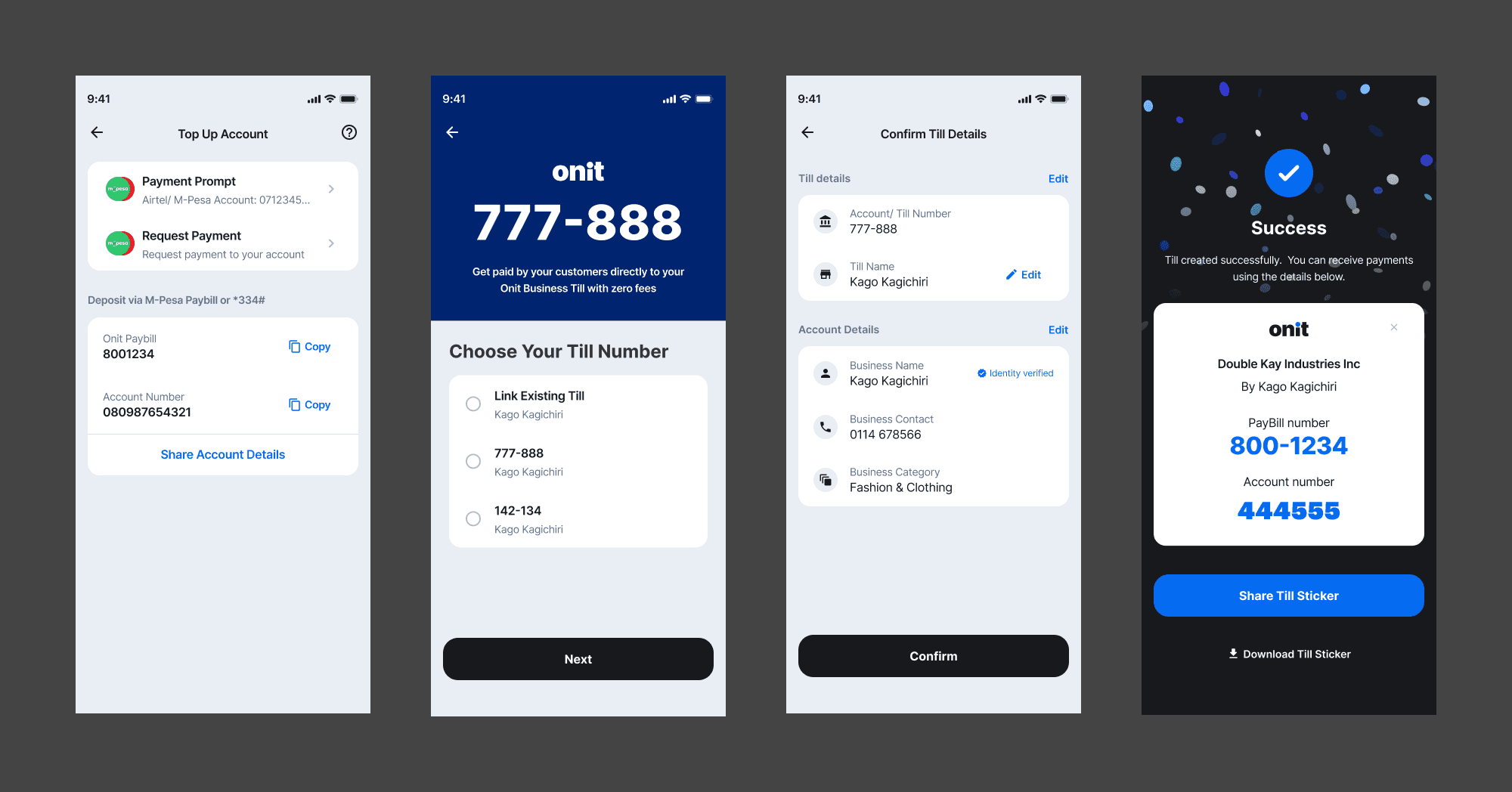
Designing banking around business growth
SMEs didn't need another bank account. They needed tools to run the business. That shifted our focus from transactions to outcomes.
Collections
Transfers
Reconciliation
Payment tracking
Receipts
Financing
BUILDING FOR SCALE
A system that kept design and engineering in sync
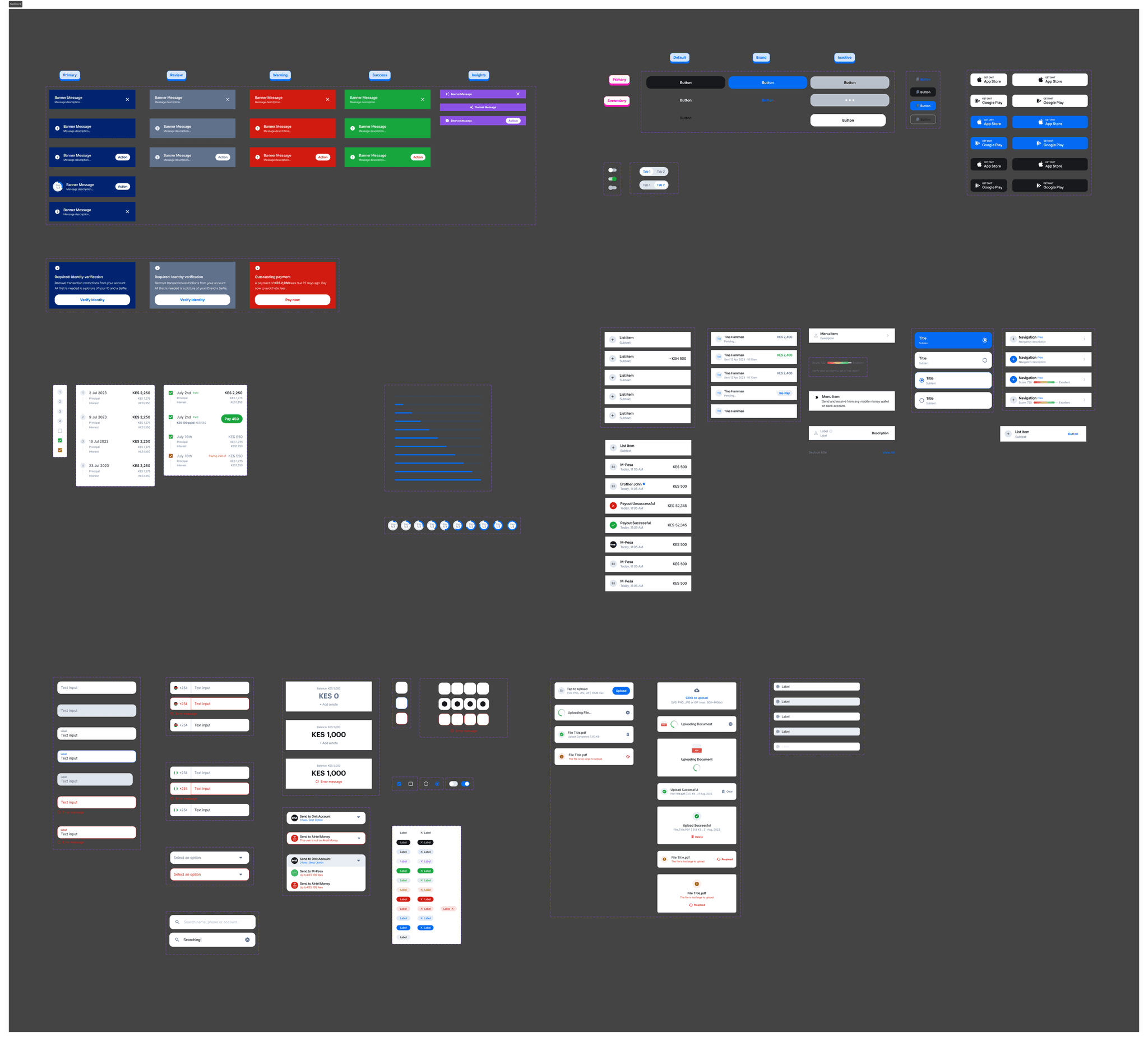
As the product matured, consistency mattered more than novelty. A shared component library accelerated delivery and closed the gap between design and engineering.
Iterative Testing and Collaborative Development
Every major experience was tested before build. Feedback shaped onboarding, payments, and account management across multiple rounds.
Trust can be designed
By simplifying onboarding, making value visible, and aligning the experience with real business workflows, we built a bank that felt approachable and useful for underserved SMEs. Deliver value before asking for commitment. Trust is earned through product experience, not messaging. Banking products should support growth, not just transactions.